
Services / Cloud & Application Security
Make security part of architecture and delivery decisions
Cloud and application-security problems often begin before a vulnerability is discovered — when trust boundaries are unclear or identities are overprivileged.
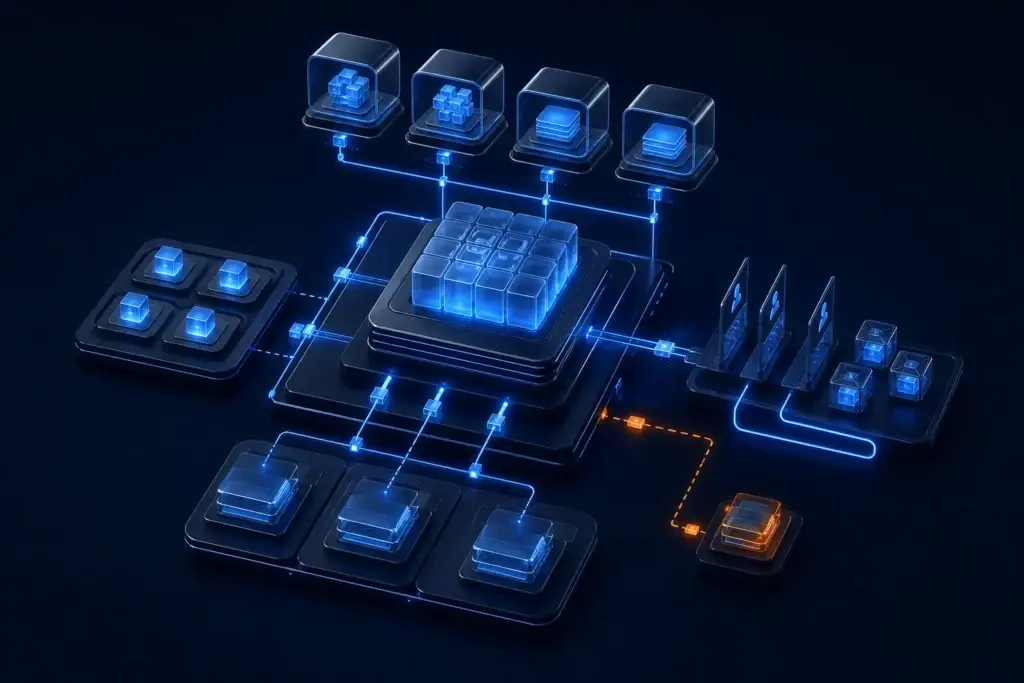
Cloud security isn’t transferred to the provider — responsibility changes by service model, but the customer still has decisions to make and controls to operate. Application security depends on requirements, design, code, secrets, testing, and deployment; a point-in-time penetration test can find weaknesses but can’t replace the engineering practices that stop the same class of weakness from returning.
Delivery-pipeline decisions carry as much weight as architecture decisions — what’s automated, what requires human approval, and what blocks a release determine whether controls actually hold under normal release pressure. Secalyx examines these decisions across architecture, development, deployment, and operation, using recognized references such as OWASP ASVS where they fit.
Cloud responsibility is shared and changes by service model — the assessment states clearly which controls remain the provider’s and which remain yours.
Trust boundaries, authentication, privileged roles, service accounts, secrets, and tenant separation.
Documenting exactly which controls the cloud provider operates and which remain yours, by service model.
Network exposure, storage permissions, key management, workload hardening, backup and recovery.
Threat modeling, secure development standards, API security, dependency and supply-chain risk.
What’s automated, what blocks a release, and whether logging and monitoring actually cover applications and cloud services together.
The final scope, exclusions, responsibilities, timeline, and expected outputs are agreed before work begins.
Cloud and application risk concentrates in different layers — this is where we look, and why.
Ownership, provider boundaries
Human and machine identities, privilege
Classification, encryption, retention
Configuration, network, hardening
Code, pipelines, releases
Logging, monitoring, recovery
Tell us the requirement, deadline, or pressure you are dealing with.
Related services: Vulnerability Assessment & Penetration Testing · SOC 2 Readiness